TAYLOR
SILVERSTEIN
SPACE WEBSITE
UNITED KINGDOM
Taylor Silverstein / Space

The solar
system.

Eight planets, one star and the spacecraft that brought their worlds into view.

Explore the planets
Space journalLatest storiesNight skyNASA headlinesSources
Space Journal
The space journal / 21 November 2026

This week in space.

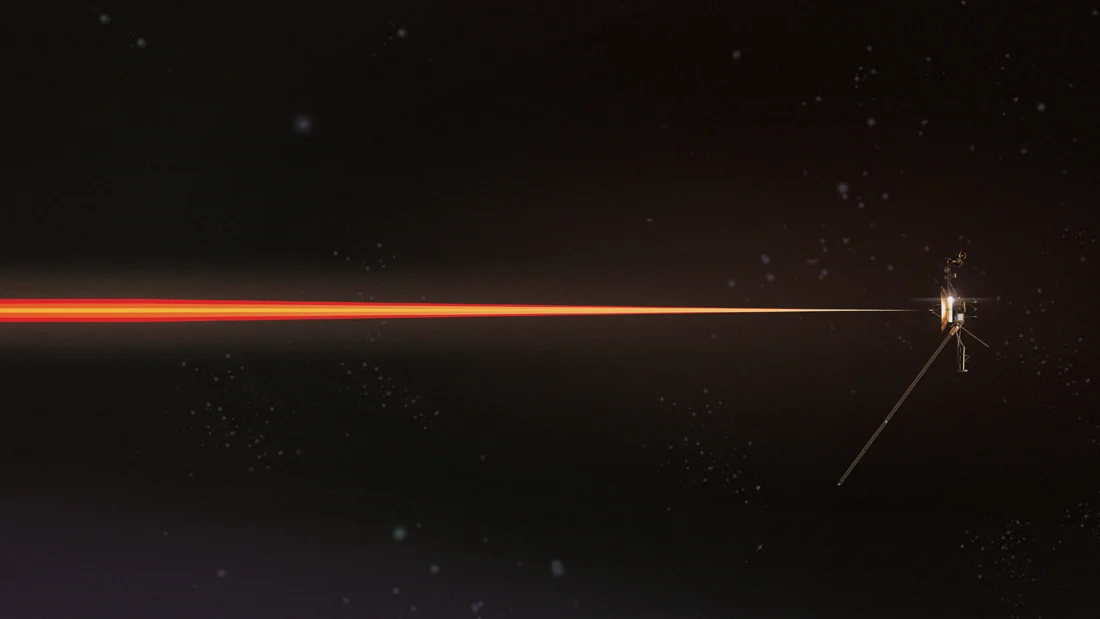
NASA illustration of Voyager 1 in interstellar space
Voyager 1 · NASA mission illustration
Interstellar space · 19 November

A day’s journey for light.

When Voyager 1 crossed the one-light-day mark on 18 November, the signal carrying news of its position still had a full day’s travel ahead. By the time it reached Earth, the spacecraft was already farther away.

At roughly 25.9 billion kilometres, even a simple exchange stretches across two days. The team confirmed the distance using the radio carrier and its trajectory calculations. At the time of NASA’s report, engineers were still investigating why the carrier had stopped bringing back science and engineering data.

Read the full Voyager report
Mars · 20 November

Twilight from the rover’s seat.

On its 5,061st Martian day, Curiosity watched clouds drift across the sky. The rover captured the scene on 31 October and NASA released it on 20 November. For a mission best known for drilling rocks, looking up offers a different record of the planet.

Read the cloud observations
Kuiper Belt · 18 November

Ancient ice leaves a trace in dust.

The samples came from surprisingly close to home. A high-altitude aircraft collected twelve dust particles in Earth’s stratosphere. Researchers traced their likely origin to the Kuiper Belt and found minerals bearing the signature of water rich in heavier oxygen isotopes.

That chemistry offers a clue to where ice was stored while the planets were forming. A grain recovered on Earth can preserve evidence from far beyond Neptune.

Mission watch / Mars

Two spacecraft, one departure.

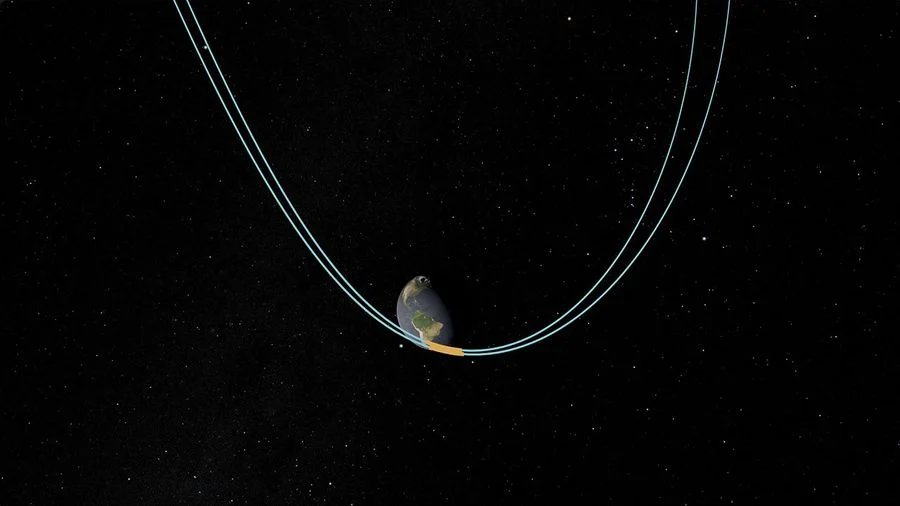
On 9 November NASA confirmed that both ESCAPADE spacecraft had completed their powered Earth flybys. Each probe combined Earth’s gravitational pull with an engine burn to begin the journey towards Mars.

A pair of probes can investigate a question that is difficult to answer with one instrument. When a measurement changes, did conditions change over time, or did the spacecraft simply enter a different region? Observations from two locations help researchers untangle those effects as the solar wind interacts with Mars.

Next milestone · Arrival at Mars is targeted for September 2027.

Illustration of an ESCAPADE spacecraft during its powered Earth flyby
ESCAPADE · Mission illustration published by NASA Science
Observing notes / November 2026

The night sky.

24November

A full Moon near perigee.

Look towards the eastern horizon around local sunset for November’s full Moon. Its orbit brings it relatively close to Earth this month, making the full lunar disk appear slightly larger. NASA identifies this as the first of three consecutive supermoons.

The difference is subtle to the eye. For a comparison you can keep, photograph this full Moon and a later one with the same lens and zoom setting. Compare the diameter of the disk in the two frames.

Explore the website

A guide to space.

From the mission archive

Inside the rings of Saturn.

In 2017, Cassini crossed the gap between Saturn and its innermost rings. Those final passes gave scientists a way to weigh the rings using the spacecraft’s changing speed.

Read the Cassini–Huygens guide
Direct from NASA

Latest headlines.

From the 21 November edition.

Browse NASA’s science coverage
Reporting & further reading

Sources.